
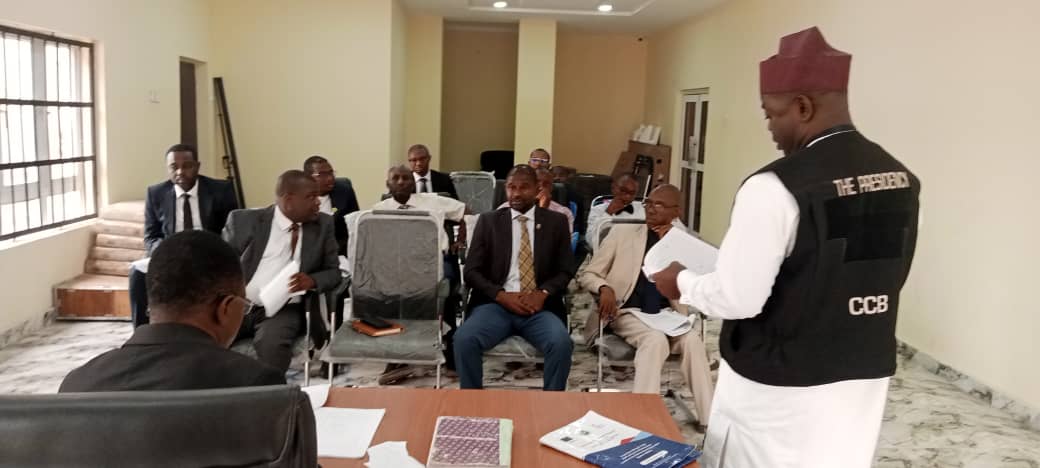
The Independent Corrupt Practices and Other Related Offences Commission (ICPC), Niger State Office, recently hosted a capacity-building lecture centred on asset disclosure, designed to deepen officers’ understanding of compliance and ethical standards within the public service.
Held at the Commission’s conference hall in Minna, the session featured Mr. Gabriel Dairo, a representative of the Code of Conduct Bureau (CCB), who delivered an insightful presentation on the legal and procedural framework of asset declaration.
In his opening remarks, the Resident Anti-Corruption Commissioner (RACC) welcomed the guest lecturer and participants, underscoring the critical role of transparency and accountability in reinforcing public trust. He emphasised that rigorous adherence to asset disclosure requirements remains a cornerstone in the fight against corruption, describing it as both a legal obligation and a moral compass for public officers.
Mr. Dairo’s presentation offered a comprehensive overview of Nigeria’s statutory and institutional architecture governing asset declaration. He meticulously outlined step-by-step procedures for accurately completing declaration forms, clarified persistent misconceptions, and highlighted the legal ramifications of non-compliance—warning that failure to properly declare assets could result in sanctions under extant laws.
An interactive segment followed, enabling participants to engage directly with the resource person on practical challenges, grey areas, and technical nuances of the declaration process.
A total of 17 officers attended the lecture, which was widely hailed as timely and impactful. Participants remarked that the session not only sharpened their procedural knowledge but also reinforced the values of integrity, accountability, and ethical conduct in discharging their duties. Many described the training as a vital reminder that transparency begins with individual responsibility.
The ICPC Niger State Office reaffirmed its unwavering commitment to continuous capacity building and institutional collaboration, particularly with bodies like the Code of Conduct Bureau, as part of a broader strategy to promote transparency and strengthen anti-corruption efforts across Nigeria’s public sector.