
The Chairman of the Independent Corrupt Practices and Other Related Offences Commission (ICPC), Dr. Musa Adamu Aliyu, SAN, has called on universities across Africa to raise a generation that values honesty, accountability and patriotism as a sustainable strategy for eradicating corruption and fostering national development.
The call was made during the commemoration of the 2026 African Union Anti-Corruption Day held at the Conference Hall of the National Open University of Nigeria (NOUN), Abuja.
The event, themed “Scaling Up the Promotion of Integrity and Anti-Corruption Actions Across Africa,” brought together key stakeholders from government, academia, anti-corruption agencies and civil society to deliberate on practical strategies for strengthening integrity and promoting ethical values across the continent.
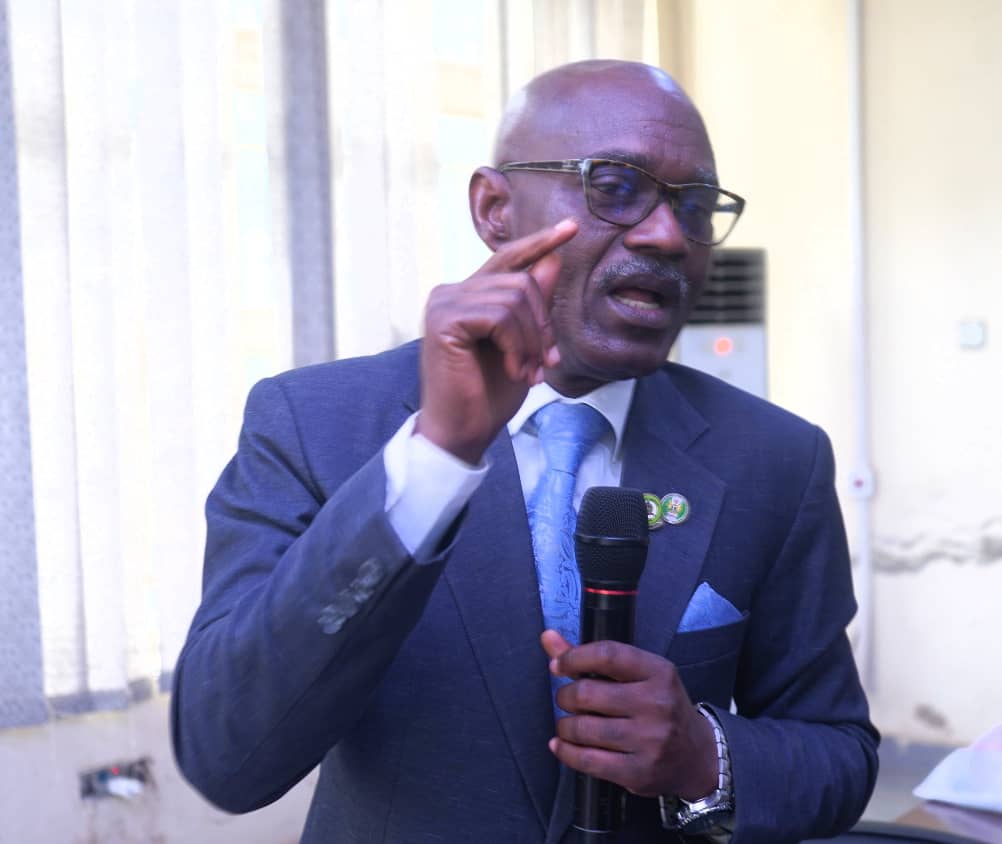
Delivering the keynote address, Dr. Musa Adamu Aliyu, SAN, who was represented by the Director, Public Education Department of the ICPC, Mr. Demola Bakare, fsi, described the choice of this year’s theme as timely and strategic, noting that corruption remains one of the greatest obstacles to Africa’s socio-economic transformation, democratic governance, peace and sustainable development.
He observed that corruption weakens public institutions, diverts scarce resources meant for development, discourages investment, widens inequality and erodes citizens’ confidence in government.
According to him, addressing these challenges requires more than enforcement alone; they demand a continental commitment to building strong institutions, nurturing ethical leadership and promoting a culture of integrity among citizens.
The ICPC Chairman stressed that as Africa pursues the aspirations of Agenda 2063, the promotion of integrity must become a shared responsibility involving governments, educational institutions, civil society organisations, the private sector, faith-based organisations, the media and citizens.
He emphasised that institutions must strengthen internal accountability mechanisms, while individuals should demonstrate integrity through their daily decisions and actions.
Dr. Aliyu urged participants to use the occasion to renew their commitment to ethical conduct, transparency and accountability in both public and private life.
He called for a shift from dialogue to concrete actions that will strengthen institutions, safeguard public resources and build a society where corruption is rejected and integrity is celebrated.
Declaring the event open, the Vice-Chancellor of the National Open University of Nigeria (NOUN), Professor Uduma Oji Uduma, who was represented by the Deputy Vice-Chancellor, Technology Innovation and Research, Professor Christine Ofulue, said corruption poses a serious threat to the stability and development of Africa.
She noted that given Nigeria’s demographic and economic importance on the continent, the country’s success or failure in combating corruption has far-reaching implications for Africa.
According to her, corruption fuels insecurity, weakens governance, hampers economic development and diminishes citizens’ confidence in public institutions.
Professor Uduma Oji Uduma further stated that the fight against corruption cannot be left to governments alone, stressing that educational institutions, professional bodies, the private sector, civil society organisations, the media, religious institutions and individual citizens all have critical roles to play in building a society where integrity is cherished and corruption is rejected.
He added that as Nigeria’s foremost Open and Distance Learning institution, NOUN is committed to producing not only academically excellent graduates but also responsible citizens who embody honesty, accountability and a commitment to public service.
Earlier in her welcome address, the Chairperson of the Anti-Corruption and Transparency Monitoring Unit (ACTU) of NOUN, Mrs. Doris C-L. Nzenwa, described corruption as “the mother of all evils,” saying it is responsible for insecurity, terrorism, kidnapping, armed robbery, rape, economic backwardness, a skewed reward system, hunger and avoidable deaths. She emphasised that the fight against corruption is not an exercise in entertainment but a collective struggle to secure the future of society.
She further stated that if the fight against corruption is to achieve the desired impact, every segment of society—not only in Africa but across the globe—must be mobilised to join the campaign against corruption.
The event also featured paper presentations and an engaging anti-corruption debate between students from the NSCDC Study Centre and Wuse II Study Centre on the topic: “Sanctions Are More Effective Than Education in the Eradication of Corruption in Society.”
The debate provided a platform for participants to advance persuasive arguments on the merits of sanctions and ethical education as tools for combating corruption, while underscoring the importance of youth engagement in promoting integrity and accountability.
A vote of thanks was delivered by Mr. Muyiwa Harrison, who represented the Registrar of the National Open University of Nigeria (NOUN), Mr. Oladipupo Ajayi.
He expressed appreciation to the organisers, participants and guests for contributing to the success of the programme.
The event concluded with a renewed commitment by stakeholders to strengthen collaboration in advancing integrity, accountability and transparency while scaling up anti-corruption actions across Africa.