
The Chairman of the Independent Corrupt Practices and Other Related Offences Commission (ICPC), Dr. Musa Adamu Aliyu, SAN, has affirmed that responsible data handling is inseparable from the Commission’s anti-corruption mandate, stressing that public trust depends not only on the Commission’s ability to investigate and prosecute corruption-related offences, but also on its capacity to protect personal information entrusted to it.
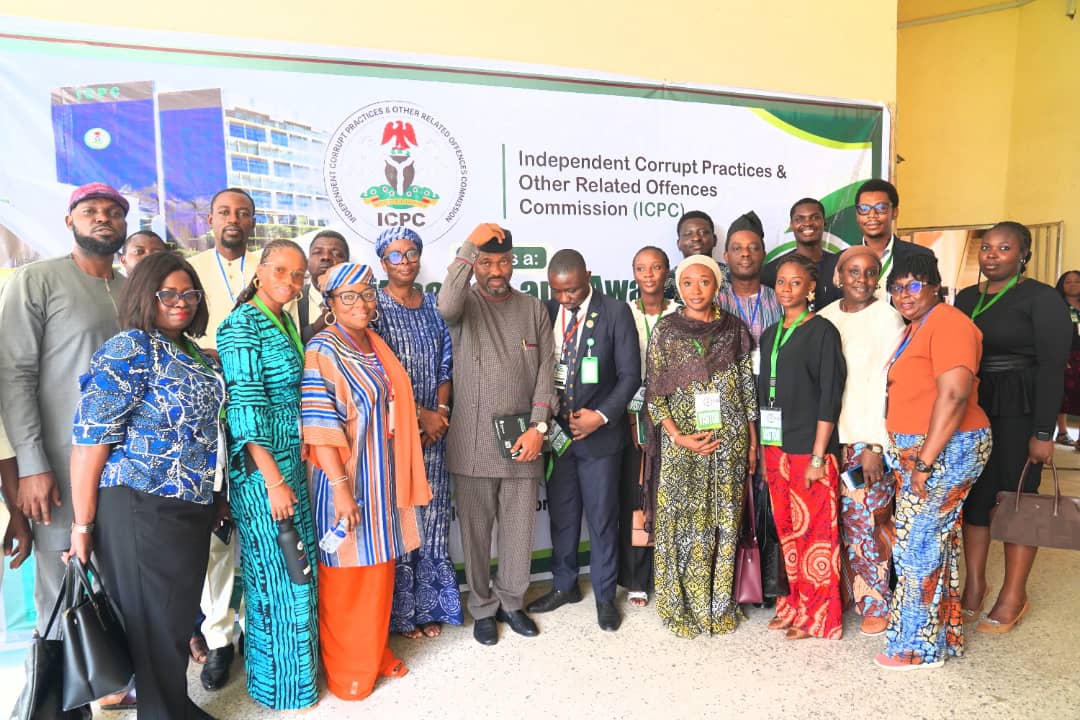
The Chairman made this known while declaring open a One-Day Sensitization and Awareness Programme on Data Protection and Privacy for officers and staff of the Commission held at the ICPC Headquarters, Abuja.
The programme, themed “Responsible Data Handling: Strengthening Accountability and Preserving Public Trust through Data Protection,” was organised to deepen awareness of responsible data management and strengthen a culture of accountability across the Commission.
Dr. Aliyu, represented by the Director, Legal Services Department, Mr. Henry Emore, noted that the Commission receives, processes, analyses, stores, shares and retains enormous volumes of information in the discharge of its statutory responsibilities, much of which relates to petitioners, suspects, witnesses, complainants, employees, contractors, consultants and members of the public.
According to him, every personal record in the Commission’s custody represents an individual’s dignity, privacy and trust, making it imperative for officers to ensure that such information is handled lawfully, responsibly and securely.
He explained that while data has become one of the most valuable assets in modern governance, enhancing decision-making, service delivery and investigations, its mishandling could expose individuals to harm, compromise investigations, undermine public confidence and damage institutional reputation.
The ICPC Chairman further stated that data protection is no longer the exclusive responsibility of ICT professionals or legal practitioners but has become an essential element of good governance, transparency, accountability and institutional integrity.
Emphasising that responsible data handling is integral to the Commission’s anti-corruption mandate, Dr. Aliyu urged officers to demonstrate integrity in the collection, access, use, disclosure, storage and disposal of personal information, noting that the principles of accountability, fairness, confidentiality and respect for individual rights must guide every aspect of the Commission’s operations.
He disclosed that the Commission has continued to strengthen its internal data protection governance framework through the establishment of the Data Protection and Incident Response Team (DPIRT), comprising officers drawn from various departments and units to identify compliance gaps, promote awareness, improve internal processes, strengthen incident response mechanisms and embed privacy considerations into operational activities.
Earlier in his welcome address, the Commission’s Data Protection Officer, Barr. David Nwaze, described the sensitization programme as a strategic initiative designed to reinforce the understanding that data protection is not merely a legal obligation but a professional responsibility and a shared institutional value.
Barr. Nwaze expressed appreciation to the Chairman and the Management of the Commission for their unwavering support towards advancing ICPC’s data protection compliance journey.
He urged participants to actively engage in the programme, ask questions, share experiences, and apply the knowledge gained in their daily responsibilities, stressing that protecting personal data is fundamental to safeguarding institutional integrity, preserving public confidence, and strengthening accountability within the Commission.
The event featured two paper presentations titled “Responsible Data Handling: Strengthening Accountability and Preserving Public Trust through Data Protection,” delivered by Mr. Inelegwu Egahi, and “The ICPC–NDPC Collaboration: Leveraging ICPC’s Institutional Mandate to Strengthen Data Protection Compliance in the Public Sector,” presented by a Nigeria Data Protection Commission official, Barr. Babatunde Bamigboye.