
The Independent Corrupt Practices and Other Related Offences Commission (ICPC) has charged officials of the Borno State Universal Basic Education Board (BOSUBEB) to embrace an unwavering culture of transparency and professional rectitude. The sensitisation exercise, recently conducted at the Board’s headquarters in Maiduguri, underscored the critical vulnerability of basic education to financial malfeasance and the imperative of safeguarding public trust.
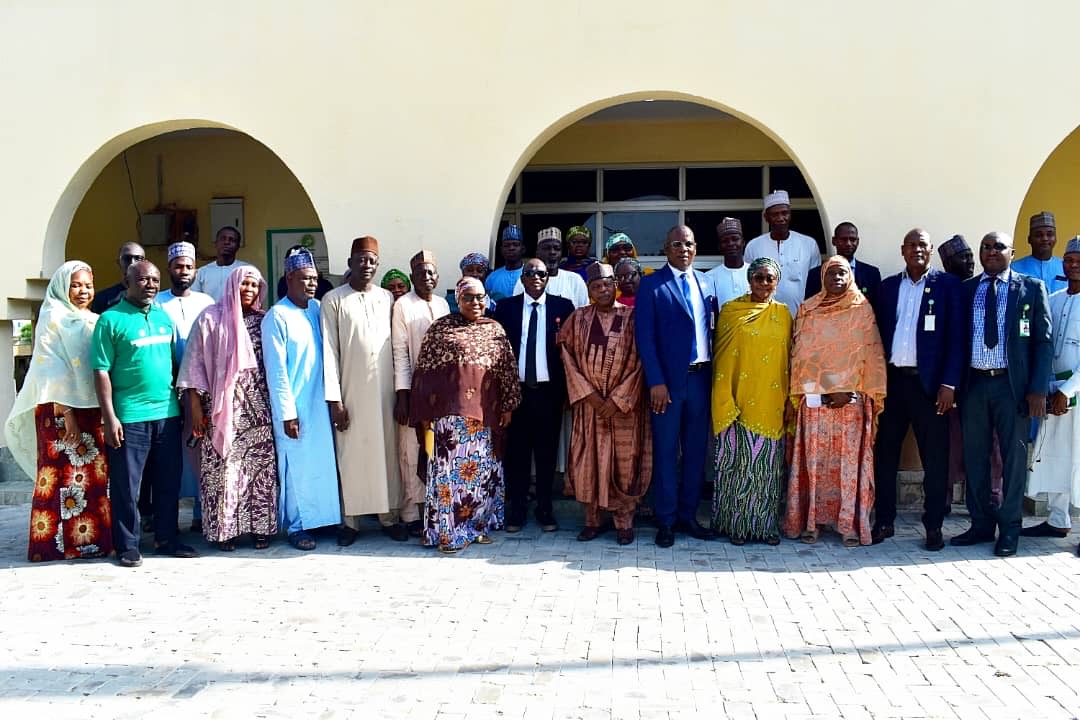
The engagement, which unfolded as a high-level interactive dialogue brought together the agency’s state leadership and the Board’s top echelon. The ICPC delegation, steered by the Resident Anti-Corruption Commissioner, Mr Linus Gubbi, utilised the forum to dissect the tenets of the National Ethics and Integrity Policy, framing it not as a punitive instrument but as a blueprint for sustainable institutional renaissance.
Addressing the assembly, Mr Gubbi delivered a stark warning that the basic education sub-sector, as the very bedrock of national development, must remain impervious to predatory practices. He identified the diversion of instructional materials, the perpetuation of ghost-worker syndromes, and procurement irregularities as existential threats that compromise learning outcomes and squander scarce state and Universal Basic Education Commission (UBEC) funds.
In a supplementary technical paper titled “Anti-Corruption and Work Ethics in Organisations”, Assistant Chief Superintendent Abba Dzikwi expanded the definition of corrupt conduct beyond the venality of financial theft. He stressed that administrative indiscipline, chronic absenteeism, and wilful neglect of due process are equally corrosive, undermining service delivery and eroding public confidence in governance structures.
The BOSUBEB team, led by the Permanent Secretary of the Ministry of Education, Dr Hyelni Haruna Mshelia, and including the Governor’s Special Adviser on Education, Alhaji Ali Makinta, and Permanent Member I, Hajj. Hauwa Ngoma, actively participated in a robust question-and-answer session. Concerns regarding project monitoring, the safety of whistleblowers, and the operational mechanics of reporting malfeasance were candidly addressed, with the ICPC offering assurances of confidentiality and a commitment to expedite investigative follow-ups.
In a notable outcome, the Board management formalised its dedication to probity by pledging to establish an Anti-Corruption and Transparency Unit (ACTU) to serve as a dedicated liaison and internal watchdog. This commitment was reinforced by the presentation of educational resources and reporting channel guides from the Commission, designed to empower staff at all levels to act as custodians of integrity.
Dr Mshelia, in her closing remarks, expressed profound appreciation for the ICPC’s proactive engagement and reaffirmed the Board’s zero-tolerance stance on all forms of corruption. She articulated a vision of an education administration that not only delivers equitable learning opportunities but does so through a lens of uncompromising accountability, ensuring that every kobo allocated translates into tangible benefits for the children of Borno.
The visit concluded a week of intensified oversight activities by the ICPC in the North-East, signalling a renewed focus on safeguarding public institutions from the deleterious effects of graft. As the newly formed ACTU takes shape, stakeholders will be watching closely to see if this pledge of transparency translates into enduring reform for the state’s most crucial public service.