
The Chairman of the Independent Corrupt Practices and Other Related Offences Commission (ICPC), Dr. Musa Adamu Aliyu, SAN, has charged public relations officers and journalists to bring accuracy and fairness to their crisis-management and reporting duties, warning that irresponsible messaging on the scale of corruption in Nigeria can backfire and inadvertently normalise the very conduct it seeks to condemn.
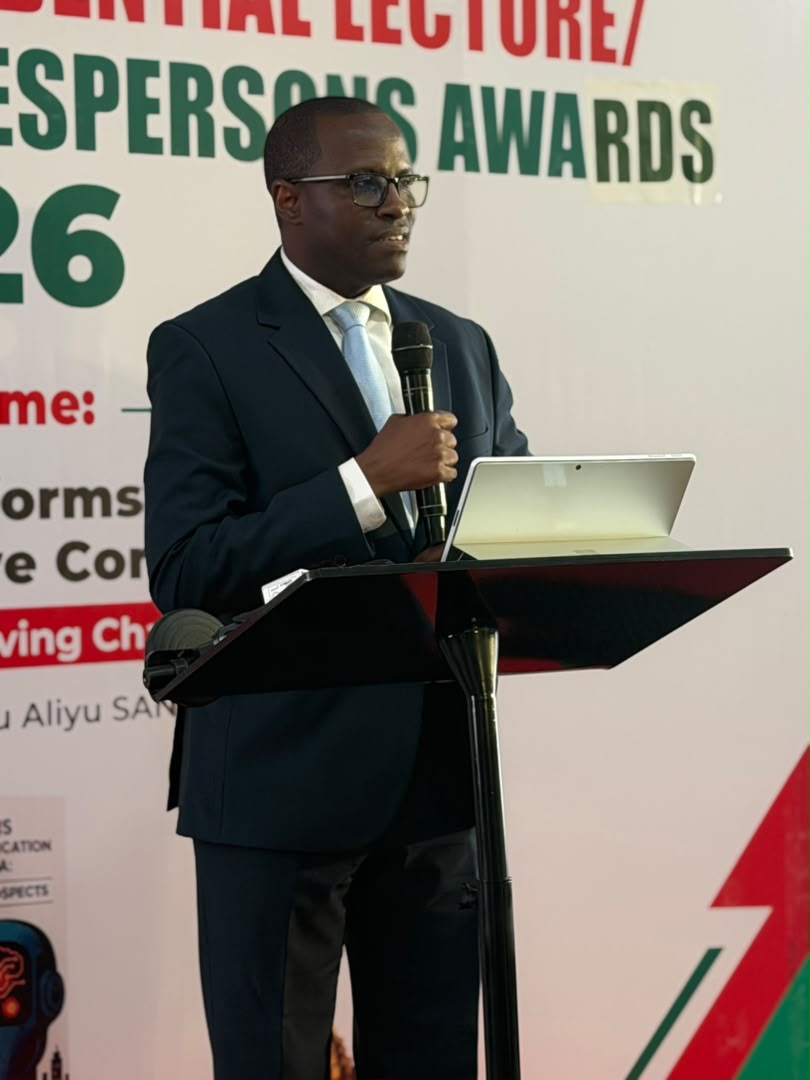
Delivering the keynote address at the 4th Economic Confidential Annual Lecture and 6th National Spokespersons Awards in Abuja on August 13, 2026, themed “Anti-Corruption Reforms, Economic Stability and Effective Communication,” Dr. Aliyu described strategic communication as one of the most underestimated tools in the fight against corruption, telling the gathering of spokespersons, editors and communication professionals that citizens cannot support reforms they neither understand nor trust.
Citing guidance from the Basel Institute on Governance, the ICPC Chairman said messages that simply emphasise how widespread corruption is can breed fatigue and resignation rather than action, reinforcing the belief that corruption is inevitable and that “everyone is doing it,” which he said weakens individual resolve to resist it. He said this was not a call to understate the scale of the problem, but to pair honest disclosure with messaging that shows citizens what they can do about it, so that candour informs rather than paralyses the public.
Dr. Aliyu said communication that is specific, locally relevant, and tied to citizens’ daily lives is far more effective than broad awareness campaigns about the evils of corruption. He added that highlighting the “true norm” — the fact that the overwhelming majority of citizens reject corruption — does more to inspire confidence and action than repeatedly reinforcing perceptions that graft is pervasive.
He said the media occupies a strategic position in the anti-corruption ecosystem, noting that investigative journalism has exposed major cases of corruption and driven institutional reforms across the country. However, he stressed that credibility remains journalism’s greatest asset, and that accuracy, professionalism, fairness, and objectivity must always prevail over sensationalism if public trust and democratic accountability are to be strengthened.
On technology, Dr. Aliyu said artificial intelligence and digital tools offer significant opportunities for predictive analytics, fraud detection, and procurement monitoring, but cautioned that emerging risks such as deepfakes and digital misinformation must be matched with stronger legal safeguards, so that innovation remains an instrument for transparency rather than a vehicle for more sophisticated corruption.
The Chairman also urged stakeholders and policy shapers at the event to look back to their educational roots and draw on their own life journeys as living references for integrity, saying such examples could help revive public hope in the system and anchor a more sustainable future. He said the Commission is consolidating related school-based interventions into a National Schools Integrity Programme, arguing that while enforcement addresses the symptoms of corruption, only a change in values addresses its cause, and that integrity must become Nigeria’s national culture rather than merely a legal obligation.
The Chairman commended the National Spokespersons Awards, organised by Economic Confidential, for recognising excellence in public communication, which he described as indispensable to national development. He said the ICPC itself has adopted this approach in its own public enlightenment work, tying its messaging to tangible outcomes and working through trusted, credible messengers such as traditional, religious, and community leaders to sustain public confidence and citizen reporting.
Beyond communication, Dr. Aliyu briefly touched on the Commission’s enforcement and prevention record, disclosing that its Constituency and Executive Projects Tracking Initiative tracked 4,582 public projects worth over N22.53 trillion between 2023 and June 2026, recovering stalled projects worth N507.04 billion and generating an estimated N385.62 billion in savings for the government. He said court-ordered forfeitures, including the recovery of properties worth over N5 billion linked to the Federal Mortgage Bank of Nigeria and N941.9 million tied to a 2024 payroll fraud scheme, continue to return misappropriated public funds and assets to the state. He said these outcomes reinforce the case for honest, evidence-based public communication rather than undermining it.
He also urged professionals in the room to see themselves as “shapers of perception” with a responsibility that goes beyond exposing wrongdoing, closing with a call for the fight against corruption to be paired with truth-telling that is “honest enough to be believed, and hopefully enough to be followed.”
In his welcome remarks, the Managing Director of Image Merchants Promotion Limited (IMPR), Mallam Yushau Shuaib, described Dr. Aliyu as an advocate of due process and a stalwart of anti-graft policy and asset recovery, and stressed the critical role communication professionals play in effective crisis management.
The event, organised by IMPR under its Economic Confidential platform, also featured the public presentation of a research report on Artificial Intelligence in Crisis Communication in Nigeria, and brought together government officials, spokespersons, editors, diplomats, security agencies, and civil society representatives at the Nicon Luxury Hotel, Abuja. Dr. Aliyu was honoured with an award for championing anti-corruption reforms, in recognition of his leadership of the Commission’s enforcement, prevention, and public enlightenment efforts.