
The Independent Corrupt Practices and Other Related Offences Commission (ICPC) has underscored the critical need for integrity within the Nigeria Customs Service (NCS), advocating a robust collaborative framework to protect public revenue and bolster public trust.
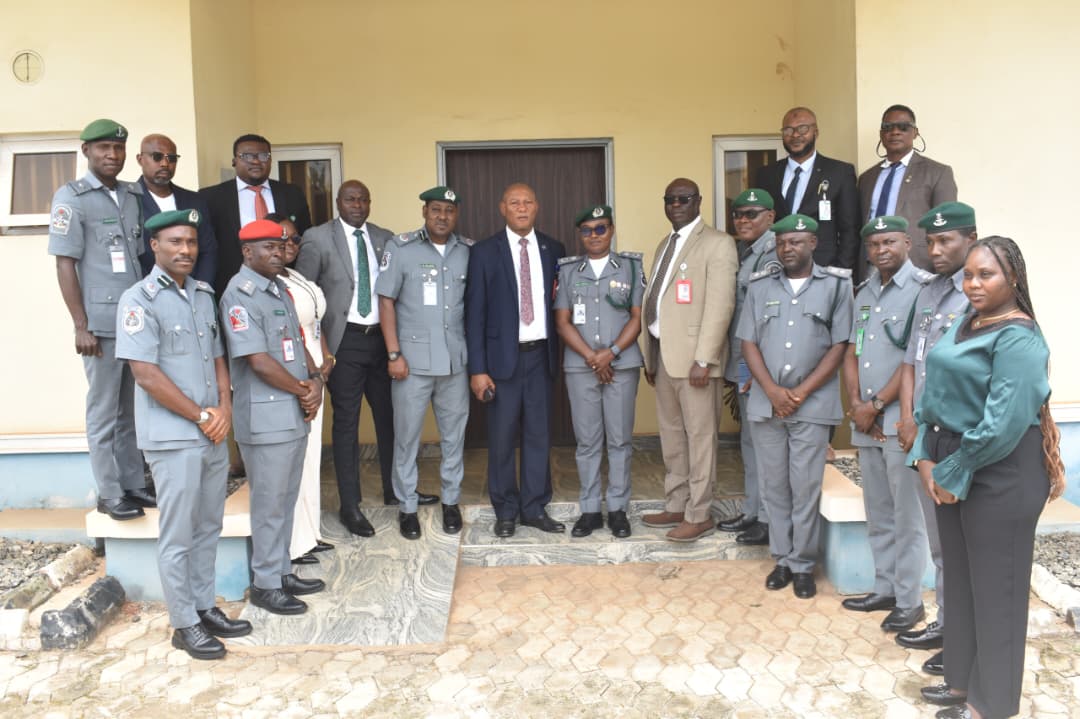
The Commission articulated this stance during a high-level courtesy visit from the newly appointed Customs Area Controller for the Ondo/Ekiti Command, Deputy Comptroller Patience O. Ita, at the ICPC’s Ondo State headquarters in Akure.
During the meeting, the Resident Anti-Corruption Commissioner (RACC) for Ondo and Ekiti States, Mr. Tiku Andrew Menge, stressed that the NCS’s pivotal role in border management, enforcement, and trade facilitation renders ethical conduct paramount.
He warned that systemic revenue leakages and the abuse of regulatory powers not only erode public confidence but also critically impair the efficacy of state institutions, creating a fertile ground for corrupt practices.
Mr. Menge elaborated on the ICPC’s holistic preventive mandate, clarifying that its remit extends well beyond the investigation and prosecution of graft; further noting that the Commission is actively engaged in identifying systemic vulnerabilities and reinforcing institutional controls, thereby fostering an environment where corrupt activities are intrinsically difficult to initiate or sustain.
Highlighting the transformative potential of modernisation, the RACC advocated integrating technology, automation, and data-driven processes within Customs administration.
He explained that such advancements could significantly enhance traceability and accountability by curbing discretionary human intervention, though he cautioned that these measures must be underpinned by ethical leadership, rigorous supervision, and robust internal controls.
In a salient clarification, Mr. Menge asserted that the objectives of corruption prevention and trade facilitation are not mutually exclusive but are, in fact, symbiotic. He argued that transparent and predictable Customs processes effectively diminish the appeal of informal channels, thereby cultivating a more reliable and secure environment for legitimate commercial ventures.
Proposing a strategic roadmap for future collaboration, the Commissioner suggested that both agencies could benefit from practical engagements in corruption-risk identification, integrity sensitisation, and stakeholder dialogue.
He emphasised that such cooperation should be guided by the overarching public interest, rather than fostering a hierarchical dynamic where one institution supervises the other, but rather leveraging their respective mandates for a common good.
In her response, Deputy Comptroller Ita affirmed that her visit was primarily to establish a constructive working relationship following her recent deployment.
She expressed her command’s unequivocal readiness to sustain engagement with the Commission on matters of mutual concern, particularly in the realms of compliance, enforcement, and the effective administration of public services.
However, Mr. Menge concluded with a firm caveat, reminding all parties that collaborative ventures must not compromise the statutory independence of either institution. His parting words served as a stark reminder of the fundamental principles underpinning their shared mission: “Partnership creates trust; it does not create immunity.”