
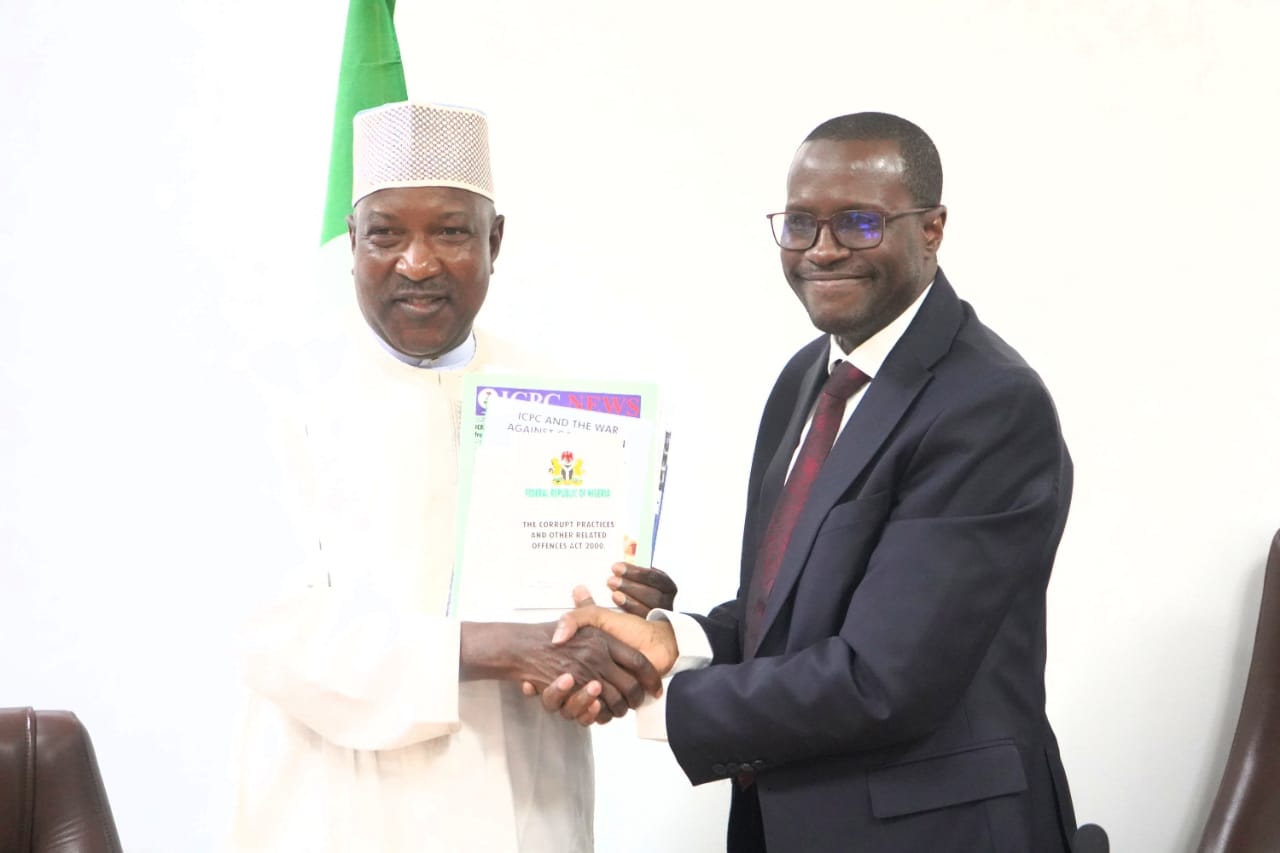
Chairman of the Independent Corrupt Practices and Other Related Offences Commission (ICPC), Dr. Musa Adamu Aliyu, SAN, has reaffirmed the Commission’s commitment to enhancing its partnership with the Nigeria Extractive Industries Transparency Initiative (NEITI). This strengthened collaboration aims to promote greater transparency, accountability, and integrity within Nigeria’s extractive industries.
Dr. Aliyu gave this assurance while receiving the Executive Secretary and senior management team of NEITI during a courtesy visit to the ICPC headquarters in Abuja today Wednesday. Welcoming the delegation, the ICPC Chairman described the relationship between the two institutions as one founded on mutual respect and strategic necessity; noting that the visit reinforced their shared resolve to ensure Nigeria’s natural resources are managed according to the highest standards of integrity.
Dr. Aliyu stated that the Commission regards NEITI as a critical ally in combating systemic corruption, particularly within the oil, gas, and mining sectors. The Chairman explained that NEITI’s audit reports provide the essential, data-driven foundation required to identify revenue leakages and to inform robust preventive and enforcement measures.
A key outcome of this partnership, the Senior Advocate of Nigeria highlighted, has been the operationalisation of the Special Extractive Industry Desk within the ICPC. Established to act directly on findings from NEITI’s audits, the desk exemplifies how the collaboration has evolved from merely reporting infractions to ensuring concrete remedial action. By integrating NEITI’s forensic data with the Commission’s investigative and prosecutory mandate, the two bodies are translating findings into tangible results.
The ICPC Chairman outlined several areas for expanded cooperation, including:
1. The real-time exchange of data concerning illicit financial flows;
2. Joint system study and review exercises within the solid minerals sector to prevent revenue loss; and
3. Joint training programmes for investigators and auditors from both organisations.
Dr. Aliyu emphasised that Nigerians rightly expect the nation’s natural wealth to fuel tangible national development. He asserted that the ICPC-NEITI partnership remains one of the most effective instruments for fulfilling this expectation. He assured NEITI’s leadership of the Commission’s continued openness to collaboration and expressed optimism that their ongoing engagement would yield even more impactful outcomes.
Earlier in the proceedings, the Executive Secretary of NEITI, Hon. Musa Sarkin Adar, remarked that since its inception, NEITI has recognised transparency alone is insufficient without robust preventive mechanisms and institutional accountability; especially in sectors with high corruption risks.
Hon Sarkin Adar described the visit as timely, coinciding with Nigeria’s preparations for the 2026 Extractive Industries Transparency Initiative (EITI) Validation exercise. This process requires demonstrable evidence of anti-corruption measures, preventive actions, and follow-up on governance weaknesses identified through audits and disclosures.
Hon. Adar stated that NEITI seeks the Commission’s continued collaboration in utilising its reports for preventive actions, enforcement where necessary, and monitoring remedial actions arising from audit findings. He stressed that such cooperation is vital to demonstrating Nigeria’s commitment to accountability under the global EITI Standard.
The Executive Secretary further noted that NEITI’s audits and policy recommendations consistently reveal systemic gaps, control weaknesses, and corruption risks across the extractive value chain. These findings, he added, are intended to support preventive interventions, investigations, and institutional reforms within the ICPC’s mandate.
He expressed confidence that strengthening the partnership between the two institutions would significantly contribute to reducing corruption risks, improving sector governance, and safeguarding Nigeria’s extractive resources for sustainable national development.