

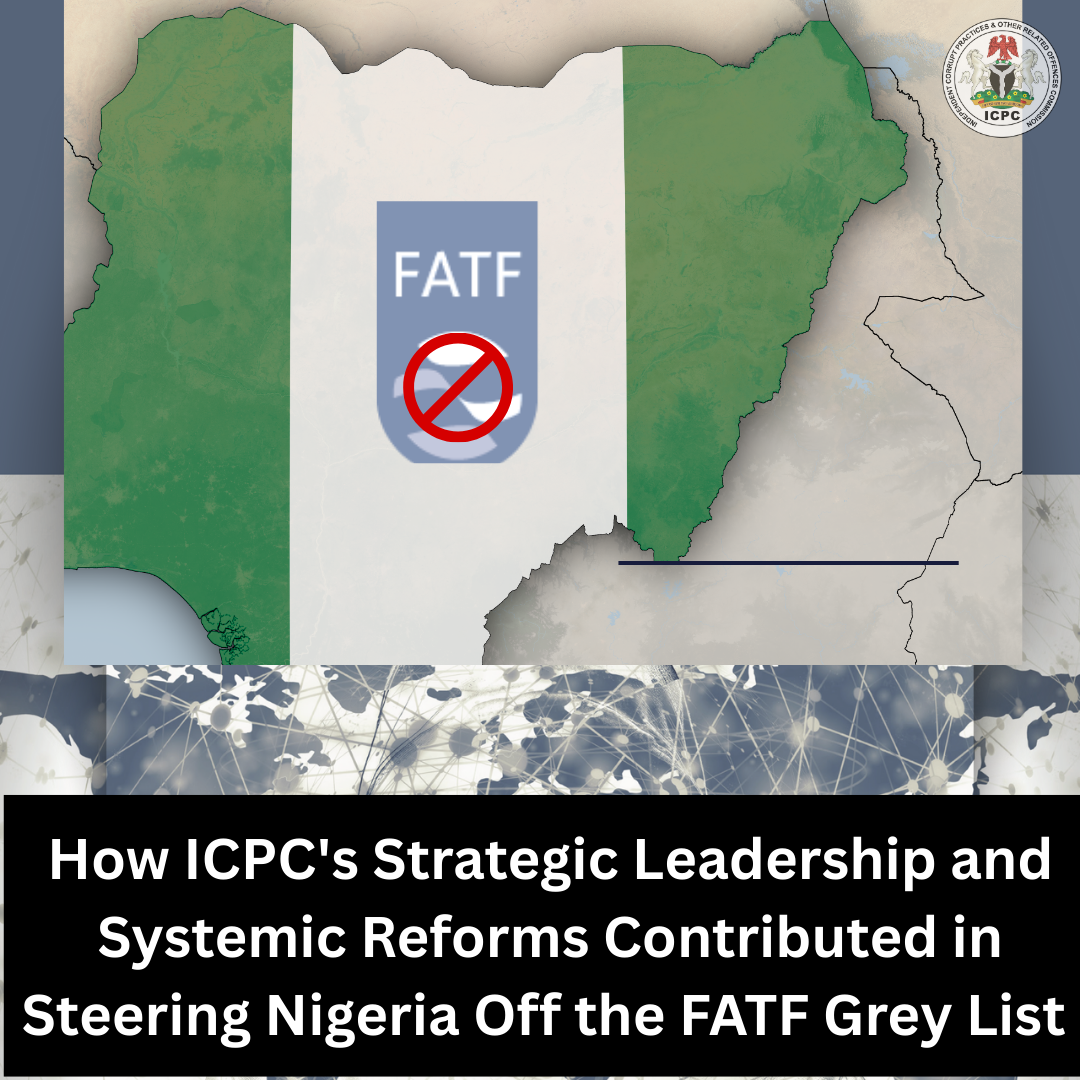
Nigeria’s recent removal from the Financial Action Task Force (FATF) Grey List marks a pivotal turning point, signalling to the global community a strengthened commitment to financial integrity and anti-corruption governance. At the heart of this transformation has been the strategic and proactive leadership of the Independent Corrupt Practices and Other Related Offences Commission (ICPC) under its Chairman, Dr. Musa Adamu Aliyu, SAN.
While the delisting is the culmination of a broad national effort, Dr. Aliyu’s stewardship of the ICPC proved catalytic. Moving beyond reactive prosecutions, he spearheads a systemic reform agenda focused on preventive frameworks, rigorous inter-agency coordination, and strategic international engagement. This involved enhancing compliance monitoring, conducting risk-based assessments, and ensuring seamless collaboration with agencies like the NFIU, EFCC, and CBN. The result was a coherent, national demonstration of sustained reform that satisfied FATF’s stringent benchmarks.
Deepening Reforms: From International Compliance to Grassroots Accountability. Building on this momentum, the ICPC is now implementing groundbreaking initiatives designed to translate this hard-won credibility into tangible multi-billion Naira democratic dividends for Nigerians. Central to this is the ICPC Constituency and Executive Projects Tracking Initiative (CEPTI), a system that meticulously monitors publicly funded projects to prevent theft and waste. By ensuring transparency and accountability in the execution of projects, CEPTI safeguards investments in critical public infrastructure; from roads and schools to health facilities, directly improving their quality and ensuring value for money reaches the citizens.
Complementing this is the creation of the Accountability and Corruption Prevention Programme in Local Government Areas (ACPP-LG). This programme proactively tackles corruption at the grassroots by empowering local communities, deepening transparency, and strengthening feedback mechanisms. The ACPP-LG institutionalises integrity at the tier of government closest to the people, addressing a critical vulnerability and ensuring the benefits of national reforms are felt locally. The establishment of such a robust, multi-level preventive architecture provides yet another substantive reason for Nigeria’s confident exit from the grey list.
The Senate of the Federal Republic of Nigeria has formally recognised the pivotal role of the ICPC and allied bodies in this national achievement. ICPC illustrates a powerful governance model: that visionary leadership, when combined with institutional strengthening and proactive prevention, can restore global confidence and deliver real-world benefits.
Nigeria’s FATF breakthrough, therefore, is more than a diplomatic milestone. It is the foundation for a new era of accountable governance. Through strategic leadership, systemic reforms like CEPTI and ACPP-LG, and a relentless focus on prevention, the ICPC is ensuring that the fight against corruption translates directly into improved quality of public infrastructure as democratic dividends for all Nigerians.
Hassan Salihu writes from the Media & Public Communication Unit of the ICPC