
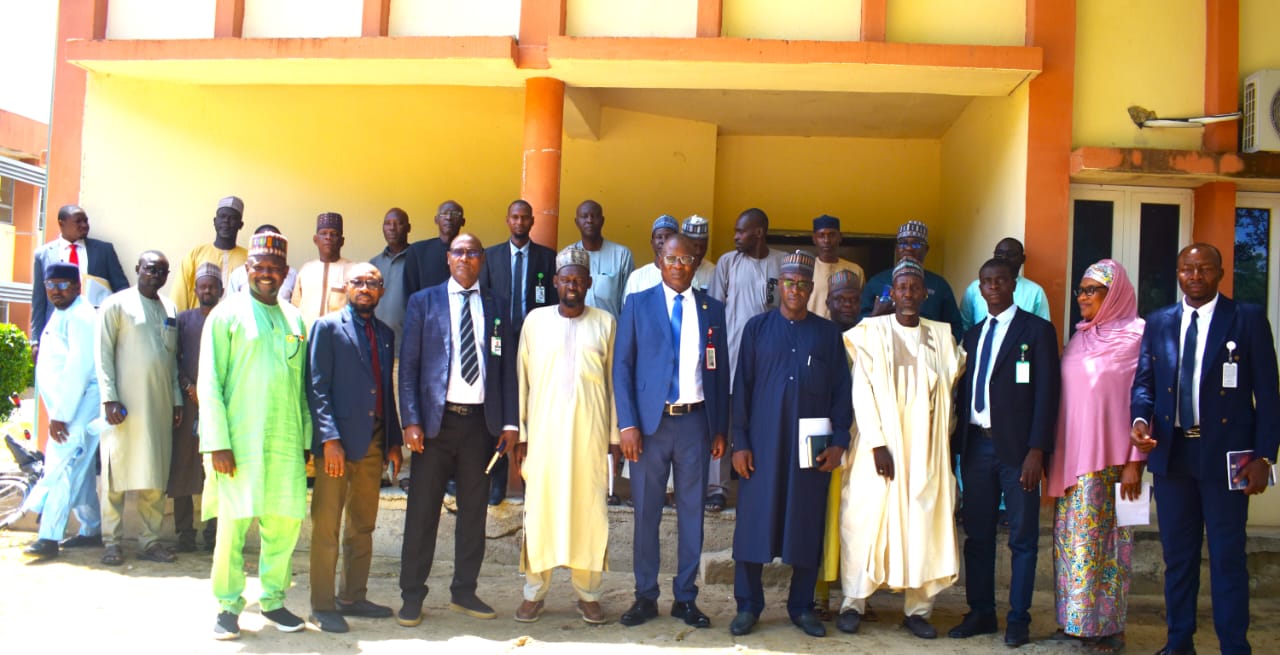
The Independent Corrupt Practices and Other Related Offences Commission (ICPC) engaged 100 staff members of the Lake Chad Research Institute (LCRI) in a comprehensive sensitisation programme aimed at embedding ethical conduct and professional accountability at every level of the Institute.
The one-day anti-corruption education workshop, convened recently at the Institute’s Conference Hall in Maiduguri under the resonant theme “Promoting Integrity, Accountability, and Transparency in Public Service: The Role of Staff in Combating Corruption,” represents a significant stride in the ICPC’s preventive mandate.
The initiative sought to equip the Institute’s workforce with the requisite knowledge of ethical standards and corruption prevention strategies, whilst underscoring their individual responsibilities in safeguarding the integrity of their workplace.
Delivering a goodwill message that set the tone for the proceedings, the Executive Director of the Lake Chad Research Institute, Professor Babagana Kabir, extended a warm welcome to the ICPC delegation led by the Resident Anti-Corruption Commissioner (RACC), Mr. Linus Gubbi.
Professor Kabir reaffirmed the Institute’s unwavering commitment to transparency and collaborative engagement with anti-corruption agencies, urging his staff to embrace a culture of professionalism and integrity, and cautioning that corruption fundamentally undermines institutional effectiveness, research development, and public confidence in government institutions.
In his address, Mr. Linus Gubbi underscored the strategic significance of the Lake Chad Research Institute to Nigeria’s socio-economic advancement, particularly its critical contributions to agricultural research, crop improvement, and land-use strategies that directly impact food security across the Lake Chad Basin.
However, Mr Gubbi issued a stark warning that such vital public research cannot flourish in an environment tainted by corrupt practices, emphasising that when public resources, research grants, or administrative procedures fall victim to favouritism, procurement irregularities, or financial opacity, it is ultimately the citizens who depend on the Institute’s innovations who bear the heaviest burden.
Delving into the practical dimensions of corruption prevention, the RACC articulated that combating corruption is not the exclusive preserve of anti-corruption agencies but a collective responsibility commencing with individual public officers.
A lead paper titled “Anti-Corruption and Work Ethics in Organisations,” presented by ACS Abba Dzikwi, provided a comprehensive examination of the legal framework governing the fight against corruption, the various forms of corrupt practices prevalent in public institutions, and the far-reaching consequences of unethical conduct.
The presentation stressed that strong work ethics are indispensable to organisational efficiency, effective service delivery, and national development, and was followed by an interactive question-and-answer session during which participants sought clarification on reporting mechanisms, whistleblowing procedures, and the full scope of the ICPC’s mandate, with the Commission’s team reiterating the importance of confidentiality in handling reports.
As part of the Commission’s ongoing commitment to institutional support, the RACC encouraged the Lake Chad Research Institute to continue strengthening its internal controls and transparency mechanisms, while assuring the management of the ICPC’s readiness to guide, collaborate with, and support institutional integrity initiatives.
In his concluding remarks, Mr. Gubbi urged participants to move beyond passive reception of the sensitisation and to internalise the lessons learned, challenging unethical practices and championing a culture of service that reflects the highest standards of the Nigerian Public Service.