
In a significant move to deepen the fight against corruption at the community level, the Independent Corrupt Practices and Other Related Offences Commission (ICPC) has undertaken a pivotal engagement with the North-East Civil Society Organisation of Nigeria (NECSOB), covering Borno and Yobe states.
The initiative underscores a growing recognition that sustainable governance reforms require the active participation of civil society as frontline partners.
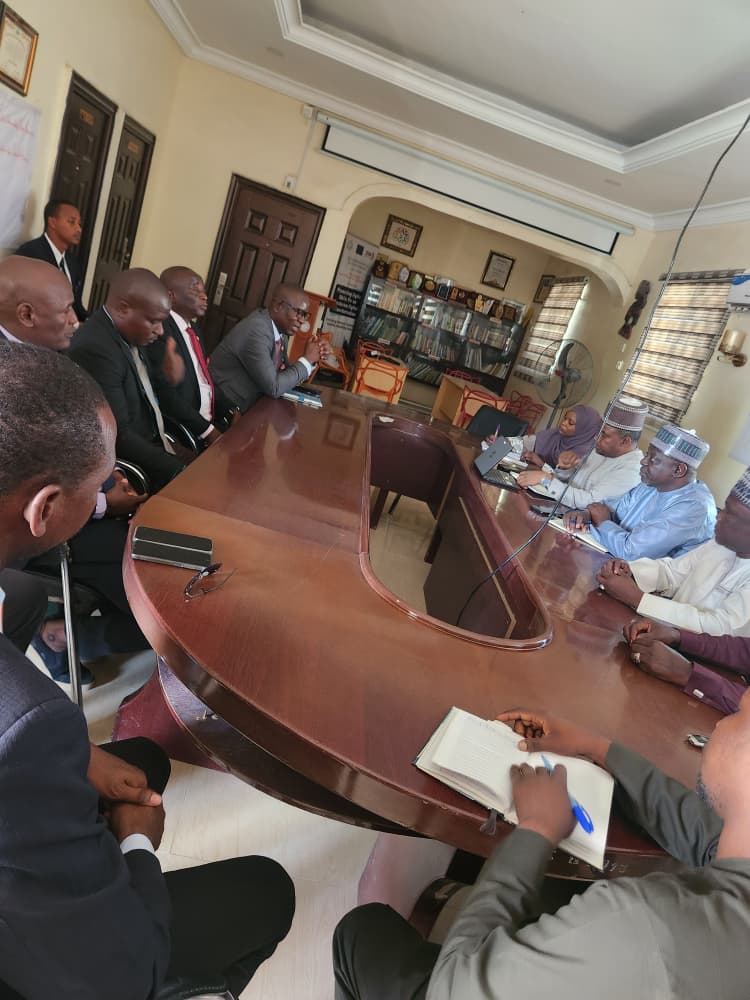
The courtesy visit, led by the Commission’s Resident Anti-Corruption Commissioner (RACC), was strategically designed to bolster collaborative frameworks for public enlightenment, community sensitisation, and the robust monitoring of government-funded projects. A central focus of the dialogue was the work of the Constituency and Executive Project Tracking Division (CEPTD), a unit vital for ensuring that public spending translates into tangible development for citizens.
Receiving the ICPC team, the Chairman of NECSOB, Ambassador Ahmed Shehu, hailed the visit as a timely and essential intervention in the collective battle against corruption. He stressed that synergy between state institutions and civil society is not merely beneficial but indispensable for promoting transparency and good governance.
“We cannot overstate the importance of this partnership. Civil society organisations are the bridge to the communities, and together with the ICPC, we can ensure that every naira allocated for development is accounted for,” Ambassador Shehu stated.
He introduced a distinguished array of stakeholders at the meeting, underscoring the broad-based support for the initiative. Notable figures included Comrade Bulama Asiso (NECSOB), Comrade Yusuf Inuwa (Executive Director, NLC), Comrade Mamman Bukar (Director, NLC), Ambassador Shettima Jaafar Imam (PACHE), Baba-Kura Bukar (FACDA), and Ambassador Kaltume Jaafaru (PCRC).
In his address, the RACC articulated the Commission’s vision of embedding anti-corruption norms within the social fabric. He emphasised that community-based organisations are critical allies in the effort to monitor constituency and executive projects, acting as the “eyes and ears” on the ground to ensure public funds serve their intended purpose. The Commissioner noted that empowering communities with the knowledge to oversee local projects is a powerful deterrent against abandonment and substandard execution.
The interactive session delved into specific mechanisms for enhancing accountability. The Second-in-Command to the RACC, A.D. David Samuel Damdakalak, highlighted the importance of collaborative efforts to help Government Ministries, Departments, and Agencies (MDAs) meet their Key Performance Indicators (KPIs). He provided insights into the Commission’s whistle-blowing framework, describing it as a crucial instrument for citizens to safely expose malfeasance and encourage a culture of accountability within public institutions.
Barrister Ibrahim Garba added a legal perspective, calling for more stringent enforcement measures and improved monitoring systems to curb the diversion and mismanagement of public funds. Broadening the scope of the discussion, he also raised a critical concern regarding sexual harassment in society, urging collective action to tackle this misconduct as an integral part of comprehensive integrity reforms.
A former Chairman of the Nigeria Union of Teachers (NUT) brought attention to specific corrupt practices observed in project execution under the CEPTI, particularly concerning e-procurement processes. He advocated for unwavering transparency and strict adherence to due process to eliminate loopholes for corruption.
Adding a vital dimension to the conversation, Hajiya Kaltume Ja’afaru passionately emphasised the indispensable role of women in fostering accountable governance. She called for their increased and meaningful inclusion in advocacy, sensitisation campaigns, and all accountability initiatives, noting that women are often the most affected by poor service delivery and are powerful agents of change within their communities.
As a tangible demonstration of its commitment to grassroots education, the ICPC delegation presented a collection of anti-corruption literature and sensitisation materials to the NECSOB Chairman. These resources are intended to support and amplify public awareness campaigns across the region.
The high-level engagement concluded with both parties reaffirming their dedication to sustained collaboration. This renewed partnership will focus on joint project tracking, continuous public education, and the strengthening of transparency mechanisms in Borno and Yobe States. A group photograph marked the occasion, symbolising a unified step forward in the shared resolve to combat corruption and champion the principles of good governance for the benefit of all citizens.