
The Independent Corrupt Practices and Other Related Offences Commission (ICPC) has taken a leading role in Nigeria’s fight against corruption. One of its key initiatives, the Constituency and Executive Projects Tracking Initiative (CEPTI), has made notable progress in promoting transparency and accountability in the execution of government-funded projects. Phase V of CEPTI continues this important work, highlighting both successes and challenges in the ongoing battle against corruption.
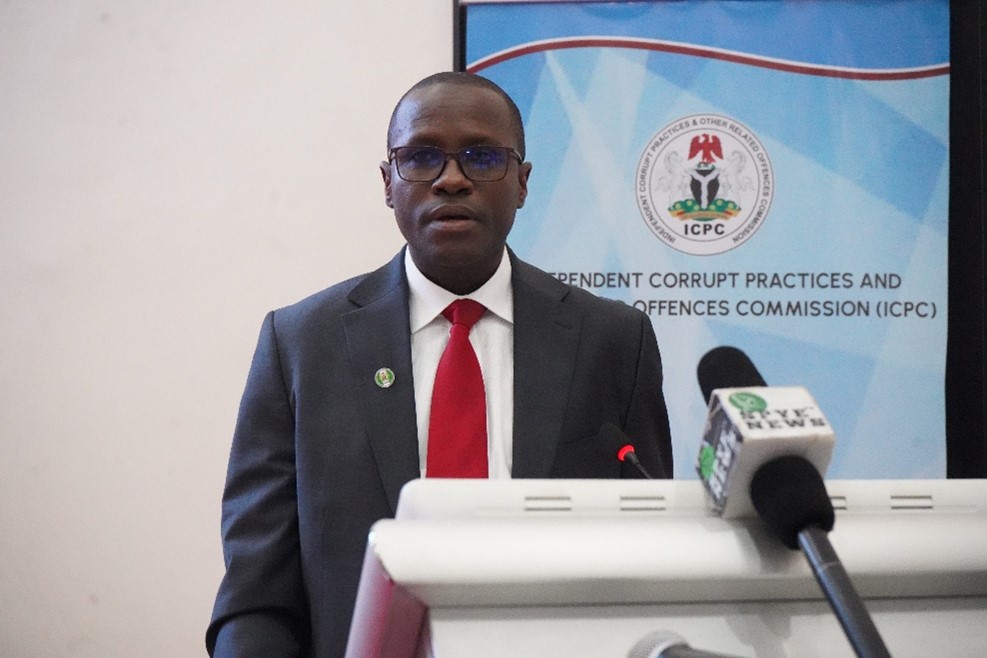
Chairman, ICPC, Dr Musa Adamu Aliyu, SAN
A vital way to achieve sustainable development for a nation is for the government to invest in infrastructure across all sectors of the economy. This investment enhances the socio-economic well-being of the population and supports good governance.
To ensure that the government receives value for money and that projects are executed properly, the ICPC began implementing CEPTI in 2019. This initiative aims to promote sanity, integrity, and accountability in the execution of public-funded projects. It is mandated by Section 6(a-f) of the Corrupt Practices and Other Related Offences Act of 2000.
Conceived in 2019 by the ICPC, the initiative seeks to foster good governance, prevent corruption, and enhance transparency and accountability. This is achieved through the annual analysis of the national budget to identify irregularities, such as duplicated projects across various Ministries, Departments, and Agencies (MDAs), highlighting projects that have been inserted without proper justification, and identifying projects that MDAs lack the necessary human resources or skill sets to execute. Additionally, it monitors budget performance and project execution to ensure value for money.
For broader acceptance and transparency, the Commission collaborates with state and non-state actors, as well as stakeholders, to serve as a Special Purpose Vehicle (SPV) for driving the initiative. These collaborators include the Bureau of Public Procurement (BPP), the Office of the Accountant-General of the Federation (OAGF), the Office of the Auditor-General of the Federation (OAuGF), the Budget Office of the Federation (BOF), the Nigerian Institute of Quantity Surveyors (NIQS), Civil Society Organisations (CSOs), and both local and national media.
Phase 6 of the tracking initiative covered projects across 176 MDAs. During this phase, the Commission enforced necessary sanctions for various infractions identified, with the exercise taking place from November 2023 to May 2024.
The initiative was focused on 26 states across the six geopolitical zones, tracking a total of 1,721 government-funded projects valued at over Two Hundred Billion Naira (₦219,843,922,945.48).
In preparation for this exercise, the national budget appropriations for the years 2020, 2021, and 2022 were analysed, and projects were selected accordingly. Among the projects tracked, there were 1,000 executive projects spanning 26 states, as well as 80 TETFUND-funded projects, selected in four projects per state in 20 states. These projects encompassed public universities, polytechnics, and colleges of education. Special attention was also given to projects from specific government intervention agencies, including the North East Development Commission (NEDC), the Ecological Fund Office (EFO), the Presidential Amnesty Program (PAP), the Niger Delta Development Commission (NDDC), the Nigeria Social Insurance Trust Fund (NSITF), and the National Health Insurance Authority (NHIA).
The exercise took place in 26 focal states and the FCT across 6 geo-political zones: North Central – Nasarawa, Niger, Benue, Kwara, Kogi, Plateau and the FCT; North East – Adamawa, Borno, Bauchi, Gombe, Taraba and Yobe; North West – Kano, Katsina, Kebbi, and Sokoto; South East – Anambra, Enugu, Ebonyi and Imo; South-South – Akwa Ibom, Bayelsa, and Edo; South West – Ekiti, Lagos, and Ondo States.
Parameters and Outcomes
The criteria for selection include: (a) National representation; (b) Financial value of the project; (c) Expected and potential benefits to local communities.
The focus of the CEPTI initiative is on projects that provide the most significant benefits to the most vulnerable members of society, particularly in areas such as education, agriculture, access to potable water, healthcare, power, rural infrastructure, and empowerment.
While the Independent Corrupt Practices and Other Related Offences Commission (ICPC) officers handle all investigative activities, Quantity Surveyors assess project quality and quantities, providing insights on cost inflation. Civil Society Organisations (CSOs) on each team monitor the transparency of the tracking processes, offering feedback to the communities about the projects. The media plays a crucial role in publicising the entire process, which helps generate public interest, raise awareness, and ensure community participation in achieving the initiative’s objectives.
To enhance efficiency, the tracking teams underwent tailored capacity-building training before being deployed in the field. During their assignments, body cameras were used to improve control and monitoring, complemented by the Kobo Toolbox application for data capturing and analysis.
Findings
This initiative yielded important findings, particularly in Kaduna, Delta, and Ogun States, where various challenges regarding infrastructure projects have been identified and addressed.
In Kaduna State, the tracking exercise uncovered multiple abandoned projects that had not been completed. These unfinished projects were crucial for the local communities, as they were intended to provide essential infrastructure and services. The ICPC intervened effectively, facilitating the completion of these projects. This action not only filled the gaps in local infrastructure but also demonstrated the importance of oversight in ensuring that development initiatives benefit the communities they are meant to serve.
Meanwhile, in Delta State, the ICPC’s investigation revealed a concerning trend in the quality of materials used in executed projects. Many contractors had opted for substandard materials, compromising the integrity and durability of the constructions. In a bid to uphold quality standards and protect public investment, the ICPC mandated these contractors to redo the work using appropriate materials. This intervention not only sought to rectify the immediate issues but also aimed to reinforce the importance of adhering to quality benchmarks in future project executions.
Ogun State presented another challenge, where the ICPC discovered instances of inflated project costs. Such financial discrepancies severely impact the allocation and utilisation of resources meant for development. Through diligent efforts, the ICPC managed to recover substantial funds from the contractors responsible for these inflated costs. These recovered funds were subsequently redirected to other developmental projects within the state, illustrating the potential for positive outcomes when vigilance and accountability are prioritised in government spending.
Findings in Kaduna, Delta, and Ogun States serve as a testament to the importance of oversight in ensuring that developmental projects fulfil their intended purpose and adequately serve the needs of the populace.
Additional findings during the exercise indicated a significant collusion between staff of Ministries, Departments, and Agencies (MDAs) and contractors or project facilitators. Some empowerment items intended for poverty alleviation were found to have been hoarded by project facilitators, possibly for use in electoral campaigns, despite being procured.
Furthermore, it was revealed that some agencies often handed over empowerment items to stakeholders for distribution to intended beneficiaries. This method resulted in the politicisation of the process and facilitated hoarding. Consequently, some of the items had expired, resulting in unnecessary wastage of government funds.
Issues such as underperformance and non-adherence to specifications in project execution were also noted. This led to funds being recovered from contractors, while others were compelled to return to the site to complete abandoned projects or rectify poorly executed work. Additionally, some officers were found to issue Store Receipt Vouchers (SRVs) for supply contracts without actual receipts of the supplies made, indicating collusion between them and the contractors.
It was noted that some completed projects were not being utilised by the intended beneficiary institutions and communities, raising concerns about the necessity of such infrastructure. For example, TETFUND projects at the Federal University of Gashua, Yobe State and the Cattle Market in Soro, Bauchi State, executed by the Northeast Development Commission (NEDC), are completed but remain unused by the institution and the community.
Many intervention agencies seem to rely exclusively on selective tendering processes, claiming ’emergency’ conditions in their procurement practices. If this is not addressed, it could hinder competition, promote favouritism, and result in poor value for money in project implementation.
Further field investigations revealed issues such as poorly executed, partially completed, or entirely unexecuted projects, prompting the Commission to mandate additional inquiries. These investigations resulted in the recovery of cash and assets, the completion of stalled projects, the enforcement of quality measures on substandard work, and the distribution of hoarded items to their rightful beneficiaries, as mandated by the Commission.
The ICPC also issued policy advisories to guide relevant agencies on project execution, including directives for administering sanctions against staff members found to have colluded with contractors or project facilitators.
The team recommended several cases for prosecution, particularly those involving project mismanagement or non-execution. These cases are currently being pursued in various courts across Nigeria.
Phase 6 of this initiative was notably successful, recovering N513 million in assets, with N29.59 billion representing the value of projects where contractors returned to the sites. The cumulative savings made by the ICPC for the government amounted to an impressive N30.33 billion.
Conclusion
The ICPC’s CEPTI Phase 6 report serves as a powerful beacon of hope for governance and integrity. It reminds us that transparency and accountability are not just ideals, but achievable realities that can transform our society. By diligently monitoring government-funded projects, this initiative has unveiled fraudulent practices, ensured the timely completion of essential projects, and recovered substantial public funds.
The success of Phase 6 inspires every citizen of this great nation to remain vigilant and united in the ongoing battle against corruption. As Nigeria journeys towards a brighter future, initiatives like CEPTI empower us all, demonstrating that when we hold our leaders accountable, we create an environment where public funds are utilised for the greater good. Together, we can foster a governance system that truly benefits every citizen, paving the way for a more just and prosperous nation. Let us embrace this challenge with passion and determination, for a better tomorrow starts with our collective efforts today!