
The Independent Corrupt Practices and Other Related Offences Commission (ICPC) has intensified its anti-corruption advocacy efforts with a sensitisation lecture delivered to 651 officers of the Nigeria Customs Service (NCS).
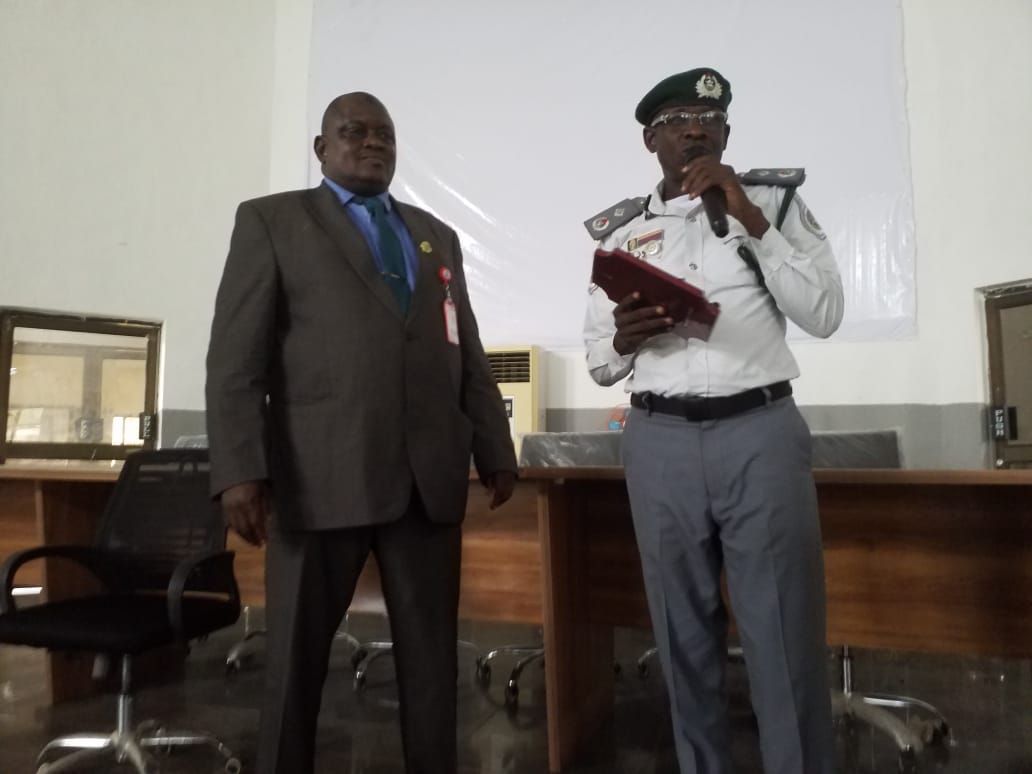
The Resident Anti-Corruption Commissioner for Kano and Jigawa States, Barr. Ahmad Muhammad Wada, presented the lecture recently to officers undergoing Regimentation Course 2 at the Customs Training College, Goron-Dutse, Kano.
In a paper titled “Anti-Corruption Strategies and Integrity in Public Service,” Barr. Wada examined the legal frameworks and legislative provisions for combating corruption within the Nigerian context.
The Commissioner outlined the dual objectives of his presentation: first, to conceptualise integrity as an indispensable instrument in the fight against corruption; and second, to galvanise institutional support for the implementation of anti-corruption strategies across the public service.
“Integrity is the cornerstone of public service,” Barr. Wada asserted. “Without it, the public service is destined for failure and stagnation.”
He emphasised that individuals who have mentally prepared themselves for ethical decision-making find it considerably easier to make the right choices when confronted with moral dilemmas. Conversely, he warned, those lacking integrity become untrustworthy and undermine the very fabric of public administration.
The Commissioner cited the case of a Customs personnel who received a national honour from the late former President Muhammadu Buhari as a testament to the virtues of integrity and dedication to duty. He urged the officers to emulate such exemplary conduct in their respective postings.
In his remarks, the Commandant of the Customs Training College, Deputy Comptroller Umar Atiku, commended the ICPC for its steadfast commitment to fulfilling its statutory mandate. He also praised the presenter for his comprehensive enlightenment of the personnel on the scourge of corruption and its debilitating effects on national development.
The sensitisation programme forms part of the ICPC’s broader strategy to embed ethical conduct and anti-corruption consciousness within the ranks of Nigeria’s law enforcement and public service institutions.