

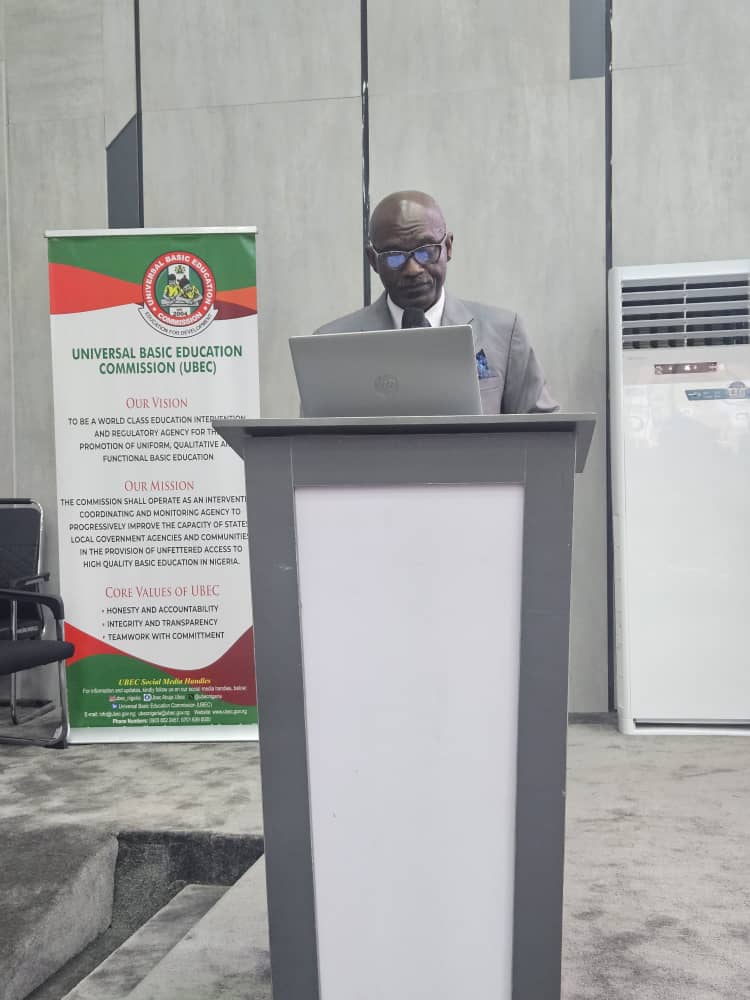
The Independent Corrupt Practices and Other Related Offences Commission (ICPC) has called for the adoption of digitally-enabled coordination to strengthen transparency, accountability, and efficiency in Nigeria’s basic education sector.
The appeal was made by the Chairman of the Commission, speaking through the Director of the Public Education Department, Mr Demola Bakare fsi, during a presentation at the 29th Quarterly Meeting of the Universal Basic Education Commission (UBEC) Management with Executive Chairmen of State Universal Basic Education Boards (SUBEBs). The event took place recently at the UBEC Digital Resource Centre in Abuja.
Describing the meeting’s theme—“Accelerating Basic Education Performance through Digitally-enabled Coordination”—as highly pertinent, the Chairman noted that the sector is in urgent need of reform driven by innovation and robust oversight.
He identified persistent challenges undermining basic education delivery, including disparities in access, poor learning outcomes, weak monitoring systems, funding delays and leakages, as well as fragmented coordination among stakeholders.
According to him, most of these issues are governance-related: weak coordination increases scope for discretion, poor data erodes accountability, and manual oversight systems breed inefficiencies and abuse.
The Chairman argued that digital transformation offers a practical solution by enabling real-time, transparent, and integrated governance across UBEC and SUBEBs. He highlighted several areas where digital tools could drive improvement: project monitoring via geo-tagging, automated financial management, centralised data platforms, and digital tools to track teacher performance.
The ICPC boss added that digital platforms could also bolster citizen engagement, allowing local communities to report concerns about school infrastructure, teacher absenteeism, or project delivery.
However, the ICPC Chairman issued a note of caution: technology alone cannot eliminate corruption risks. Without adequate safeguards, digital systems risk merely automating existing inefficiencies or concealing new forms of malpractice.
He therefore urged the institutionalisation of integrity frameworks within all digital initiatives. These should include corruption risk assessments, regular system reviews, the strengthening of Anti-Corruption and Transparency Units (ACTUs), the promotion of open data, and continuous capacity building for education sector stakeholders.
The Chairman reaffirmed the ICPC’s commitment to supporting UBEC and SUBEBs through advisory services, system studies, and preventive interventions designed to strengthen accountability in programme implementation. He also encouraged the sustained roll-out of ethics and integrity initiatives, including the National Values Curriculum and anti-corruption sensitisation programmes in schools.
The ICPC concluded by reiterating that improving basic education outcomes remains a national priority, requiring collective commitment from all stakeholders involved.