
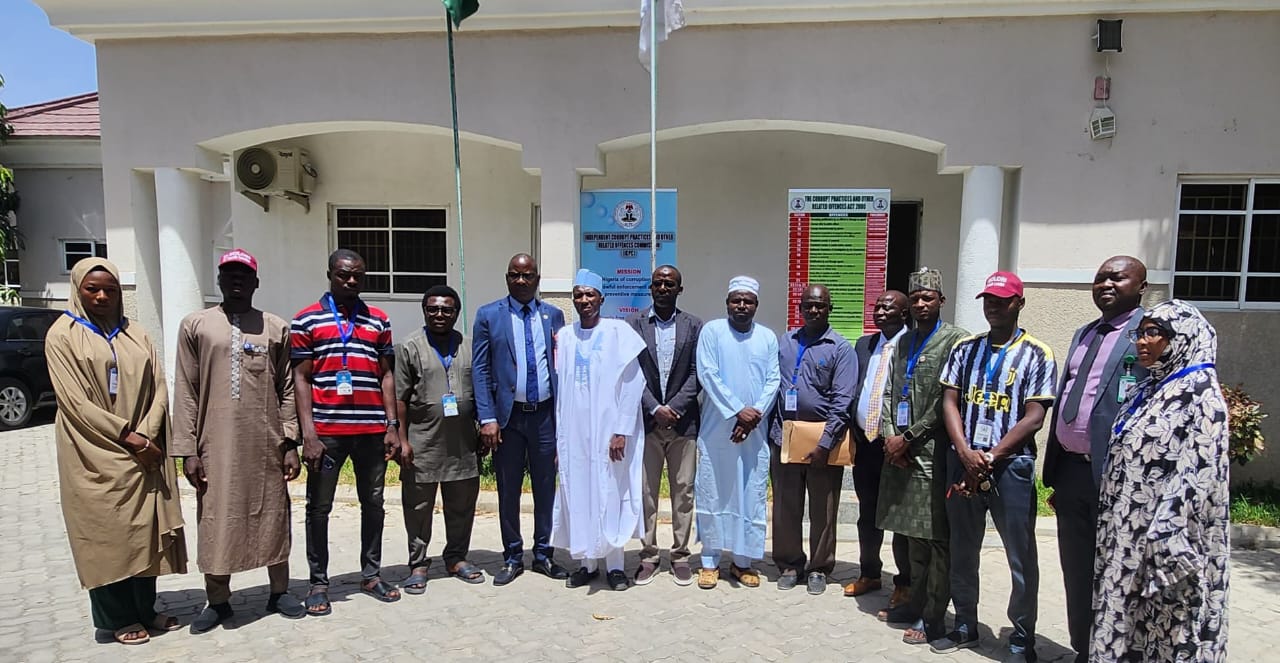
In a significant move toward leveraging modern communication tools in the fight against corruption, the Borno State Office of the Independent Corrupt Practices and Other Related Offences Commission (ICPC) recently played host to the Borno State Chapter of the Content Creators and Social Media Influencers Association.
The meeting, which took place recently in Maiduguri, the state capital, marked a pivotal step in bridging the gap between anti-corruption institutions and the influential voices shaping public discourse in the digital age.
While the Commission had initially planned to reach out to the group, the association took the initiative by embarking on a courtesy visit to the ICPC office. This gesture was not merely ceremonial; it was a powerful demonstration of their solidarity with and, endorsement of the Commission’s ongoing efforts to entrench integrity within society.
The visit underscored a growing recognition among digital content creators of their role as stakeholders in governance and social reorientation.
Welcoming the delegation, the Resident Anti-Corruption Commissioner (RACC), Mr Linus Gubbi, underlined the immense transformative power of social media when harnessed for positive change.
He noted that in an era where information spreads rapidly across platforms, influencers and content creators are uniquely positioned to shape attitudes and challenge unethical norms.
The RACC specifically called on the contents’ creators to amplify the ICPC’s anti-corruption messages through their various digital channels Instagram, Facebook, X (Twitter), TikTok, YouTube, and WhatsApp. He emphasised the need to simplify the Commission’s ideals by translating them into local languages and embedding them in culturally relatable content.
According to Mr Gubbi, the goal is to make anti-corruption messaging accessible, engaging, and impactful for diverse audiences across the state and beyond.
Beyond general advocacy, Mr Gubbi encouraged the influencers to employ creative formats such as short videos, skits, and animations to vividly illustrate the dangers of corruption and its debilitating effects on national development.
He also highlighted the importance of public awareness in reporting corrupt practices, urging the group to educate their followers on how to report suspicious activities through the ICPC’s official communication channels.
This, he noted, would enhance citizen participation in the anti-corruption crusade.
In a commitment to sustain this partnership, the RACC assured the association that the ICPC would regularly organise seminars and capacity-building sessions for its members.
These forums, he explained, would keep creators informed about the Commission’s initiatives and help identify collaborative opportunities for promoting a corruption-free society. The move reflects a forward-thinking strategy that recognises digital platforms as vital arenas for behavioural change and civic engagement.
Responding on behalf of the group, the Chairman of the Borno State Chapter of the Content Creators and Social Media Influencers Association, Mr Williams Sunday, expressed deep appreciation to the RACC for considering the group worthy of such collaboration. He described the engagement as both an honour and a call to duty, reaffirming the association’s readiness to support the ICPC in fulfilling its mandate.
Mr Sunday pledged that members would deploy their creative talents and online influence to complement the Commission’s public sensitisation efforts;: emphasising that the fight against corruption requires collective responsibility, and that content creators are prepared to play their part by producing compelling, educational, and locally resonant content that discourages corrupt practices.
The visit concluded on a note of mutual commitment, signalling the dawn of a strategic alliance between institutional authority and digital creativity in the battle for Nigeria’s ethical renewal.